Pokazywanie postów oznaczonych etykietą GUP. Pokaż wszystkie posty

wtorek, 11 marca 2014

An Interview with Sputnik’s Rafał Milach and Ania Nałęcka

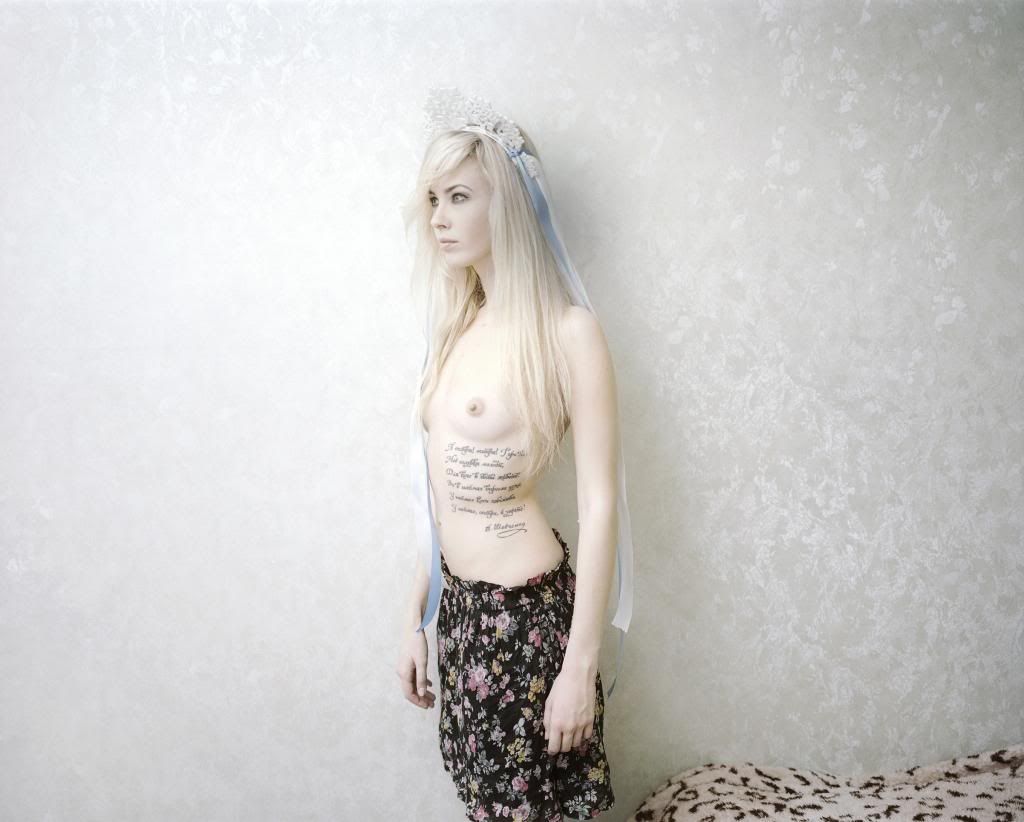
© Sputnik Photos, Agnieszka Rayss – U

For almost ten years, the photo collective Sputnik has focused on Post-Soviet countries, in search of personal stories instead of ‘hot news issues’. The nine photographers of the collective include winners of many awards, such as World Press Photos and Pictures of the Year. Founding member Rafał Milach, along with his partner Ania Nałęcka, who designs all of Sputnik’s books, were in Utrecht for the opening of Sputnik’s exhibition at Fotodok, the first exhibition dedicated entirely to the collective. They sat down with GUP to talk about Sputnik’s start, photo books as a slow medium and how they learned to work together as a couple. 

Sputnik unofficially started in 2004 when Polish photographer Rafał Milach (b. 1978) went to a workshop in France, where he met other photographers from Eastern and Central Europe. “Funnily enough, we met in France for the first time. Most of us were from Warsaw, but we didn’t even know each other,” Rafał says while taking a break from building up his exhibition at Fotodok. Sitting in the brightly lit office, he sometimes gets up and runs over to take a book from the shelves, to illustrate what he’s talking about. The participants from that workshop in 2004 got along better than any of them could’ve expected, he says. “It was mostly the energy that we felt," Rafał explains. "During the workshop, we discussed methods and edits. And we hung out. We didn’t even really work together that first time, but it was an intense and important time for all of us. During one of those late night dinners, while freely discussing ideas, it turned out that everybody was passionate about working together. Someone proposed the name Sputnik. That name is related with transmission and we wanted the collective to be our personal broadcast, filling the gaps that mainstream media forget about. Our main focus would be on Post-Soviet countries, where we all come from. Even though we didn’t know each other yet, we felt this energy between us. Sometimes you meet people and you know that you could work with them. So we decided to give it a try.
 

wtorek, 11 lutego 2014

Not a Metaphor: An Interview with Alisa Resnik

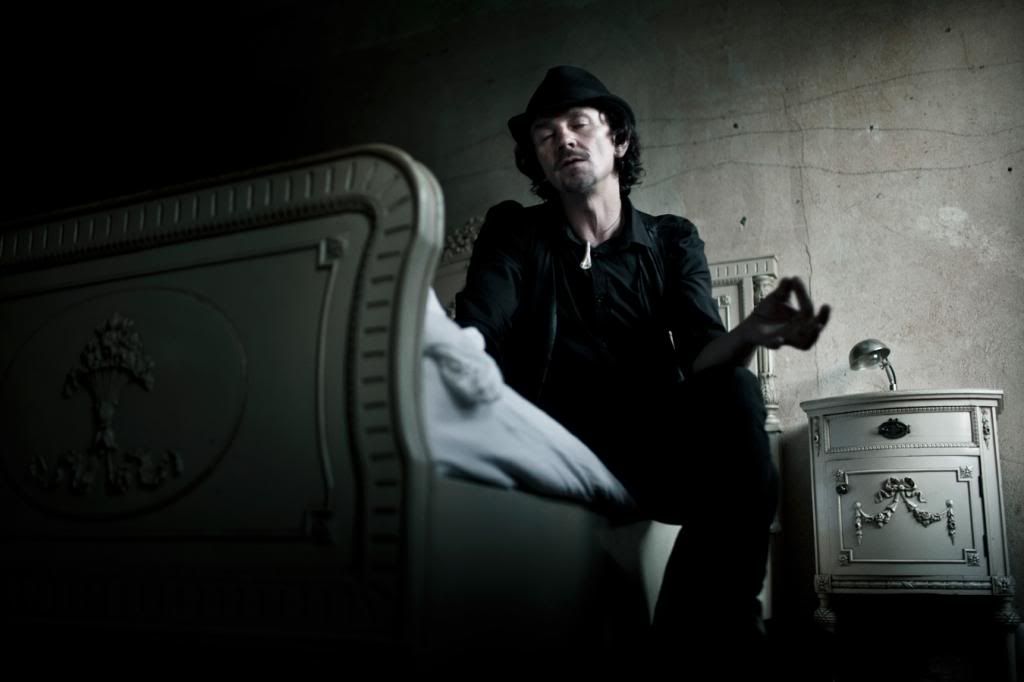
Photographer Alisa Resnik
Alisa Resnik’s (b. 1976, Russia) gloomy photos of dark interiors, people in bars and streets at night, have received a lot of attention recently. Her series One Another won the 2013 European Publisher’s Award for Photography, and as a result was published simultaneously by the five publishers supporting the award. On Christmas Eve, Resnik made time to speak with GUP about loneliness, looking for the light in the dark and how that is not a metaphor.
Your photographic work takes place mostly at night in restaurants and bars, but you also work as a waitress. Do these two occupations influence each other?
When you are a waiter, you are an observer. It’s interesting to look at people. Just to see how a person moves: how does the person order, how does the person eat, how does the person relate to the waiter? People don’t know that you are an observer, they’re eating and drinking, they’re just relaxing. They don’t know that there’s somebody who’s looking at them in a phenomenological way! (Laughs) I’ve learned a lot about people while working as a waitress, and I use it in my photography.
 

Tiksi - An interview with Evgenia Arbugaeva

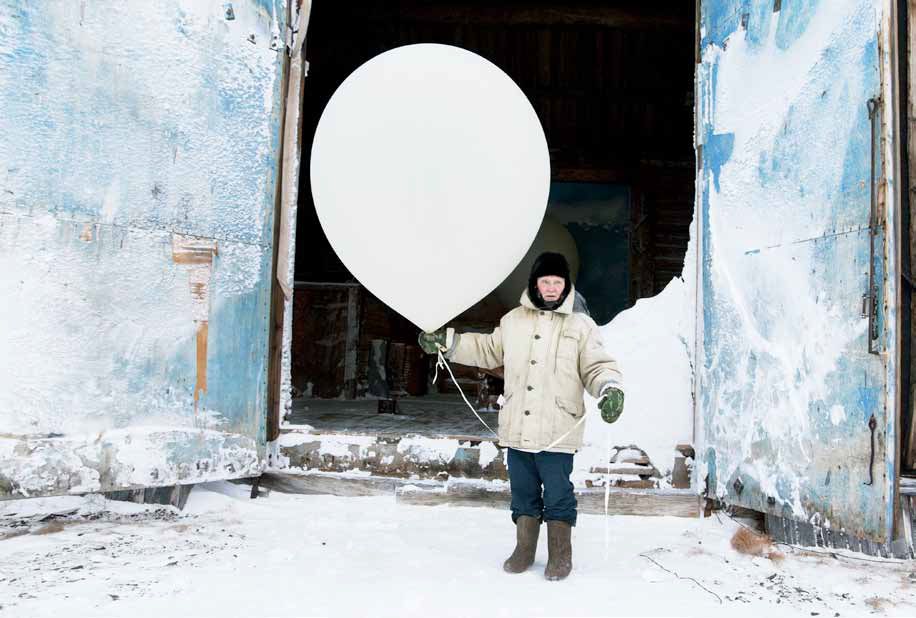
Photographer Evgenia Arbugaeva
Since her graduation from the International Centre of Photography (ICP) in 2009, Evgenia Arbugaeva (1985, Russia) has gained worldwide recognition for her work on Tiksi, a small town in Northern Russia resting on the coast of the Arctic Ocean, where she spent the early years of her childhood. In 2012 she received the Bright Spark award in the Magenta Foundation’s Flash Forward Competition for emerging photographers, and a Magnum Foundation Emergency Fund Grant.
In 2013 Arbugaeva was named one of PDN’s ‘30 Emerging Photographers to Watch’ and she won the Leica Oskar Barnack Award at the Rencontres d’Arles. She has also been selected for the 20th edition of the Joop Swart Masterclass, the annual masterclass for emerging photographers organised by World Press Photo.
Things seem to be taking off in your photography. Where did it all start for you?
When I was an exchange student in high school in Connecticut (USA), I took a class in photography.
There I learnt many things that got me into photography. Somewhat later, when I was around 19 years old, I met a female ‘Even’: a member of a nomadic indigenous tribe of Yakutia (Russia) who lives part-time in the city and part- time in a reindeer herd. Her son was wounded after a gas explosion and she didn’t have money for his surgery. 

Eyes in progress - Social Documentary workshop with Tomasz Gudzowaty

Eyes_in_progress_image_libre_droit_tomas_gudzowaty-copie
Tomasz Gudzowaty
Photographer Tomasz Gudzowaty hosts a social documentary workshop at Eyes in Progress in Paris from 14 until 17 May. Gudzowaty began his photographic career with nature photography, later turning to social documentary. For the past few years he has focused on sports photography and is particularly interested in non-commercial sports. His work has been published in Max Magazine, L’Equipe, The Guardian, Newsweek, Forbes, Time, Photo, British Journal of Photography and Spook Magazine. Gudzowaty has won many of the profession’s premier contests, including nine previous World Press Photo awards, as well as Pictures of the Year and NPPA Best of Photojournalism awards. 
The workshop is open to professional photographers, advanced amateurs and journalists.
Applications will be open until April 14th, 2014
For more information visit Eyes in Progress  

czwartek, 21 listopada 2013

GUP about - Tony Ray-Jones "American Colour 1962-1965"

Photo © Tony Ray-Jones
American Colour 1962-1965 by Tony Ray-Jones draws from the vast archive of one of the keenest observers of British society and culture, presenting a selection of his early experiments with colour photography. Coming to the States on a scholarship in the early ‘60s with the background of a graphic designer, Ray-Jones threw himself into the street life of New York and witnessed the excitement and sense of departure that was stirring the nation at the time. Developing his own viewpoints, both artistic and personal, he also dove into the newly emerging medium of colour film. This book shows a selection of these ‘isolated sketches’ in colour, as Ray-Jones referred to them, and sheds a new light on a photographer whose later black-and-white work exerted an enormous influence on British documentary photography.

GUP about a book - Rafal Milach "Black Sea"


Rafal Milach photographs the concrete heaven of the southern Ukrainian coastline in his book Black Sea Concrete. 
The visual journey of Rafal Milach’s self-published book Black Sea of Concrete begins with the cover: a front to back, full-bleed photograph of a painted mural of the Black Sea. Although the wall art portrays the warmth of the sea and sky, there’s rust bleeding through the cracks in the concrete canvas. The enclosed series of photographs shows the southern Ukrainian coastline, an area frequented by vacationers from around the Soviet Union, and yet, Milach chooses not to present the beautiful seaside view marketed as the Crimean dream.