Pokazywanie postów oznaczonych etykietą interview. Pokaż wszystkie posty

poniedziałek, 27 lipca 2015

Interview with Photojournalist / Documentary photographer Tomasz Lazar


Photographer Tomasz Lazar

Born 1985 in Szczecin, Poland. An independent photographer, a graduate of the West Pomeranian University of Technology, Faculty of Computer Science and Information Technology. Winner of photography contests in Poland and abroad (e.g. the Sony World Photography Award, the International…


środa, 9 lipca 2014

Interview with Veteran Documentary Photographer Stephen Shames

Photographer: Stephen Shames
These are pictures of friends I met as children who became my family, as well as, people who stepped in front of my camera once and disappeared forever. I watched my friends grow up, fall in love, have children of their own. The boys in the original “crews” are now in their forties—their children are becoming adults. A few, including my two Godsons, have made it; many others are dead or in jail.

Often I am terrified of The Bronx. Other times it feels like home. My images reflect the feral vitality and hope of these young men. The interplay between good and evil; violence and love; chaos and family are the themes—but this is not a documentation. There is no “story line”. There is only a feeling.

środa, 21 maja 2014

Amazing New York City: interview with Ron Gessel

Photography by Ron Gessel
New York - the city of my dreams. Well, it was… After moving to London I eventually realized that I am not so passionate about big cities. I still love them, though. And I am still dreaming of visiting the Big Apple. That’s why I am very critical about the photographers who shoot street life of this city: there are so many great photographs, it’s hard to find any better anymore. I mean, what else can you come up with that is different? Well, Ron Gessel succeeded in surprising me. The art director from the Netherlands (oh, I loved their Eurovision song this year… just something to be remembered) who studied Graphic Design, had a very interesting idea of how to represent this city. Of course, he’s not the first photographer to capture real life, but I liked the coloring; the moments he caught in the busy street and how he brilliantly mixed portraits with architecture of the city. You could easily call Ron a frequent traveler. He’s visited the USA (of course…), China, Japan, Malaysia… Ooh, the countries that I would one day like to visit as well. Finally, without wasting any more of your precious time, I would like you to read our interview with the person, who uniquely amazed me with New York’s photographs, - Ron Gessel.  

czwartek, 27 marca 2014

Anita Andrzejewska - uważna fotografia podróżnicza /Olga Drenda/

Photographer Anita Andrzejewska
Oszczędny, czarno-biały charakter zdjęć wywodzi się z grafiki. Anita Andrzejewska stworzyła swój własny styl fotografii podróżniczej - uważny i medytacyjny... 

Fotografujesz prawie wyłącznie w czerni i bieli - dlaczego?

Lubię oszczędne środki wyrazu i szlachetność tradycyjnej techniki srebrowej. Kolor jest bardzo dominującym, dosłownym elementem, ma swoje znaczenie symboliczne, działa na emocje. A rezygnacja z użycia koloru przynosi od razu pewien stopień wyabstrahowania obrazu z rzeczywistości. Zasadą kompozycji  czarno-białych zdjęć jest światło, które wydobywa motywy z cienia. I to właśnie ta opozycja światła i cienia jest tu najważniejsza.

wtorek, 11 marca 2014

An Interview with Sputnik’s Rafał Milach and Ania Nałęcka

© Sputnik Photos, Agnieszka Rayss – U

For almost ten years, the photo collective Sputnik has focused on Post-Soviet countries, in search of personal stories instead of ‘hot news issues’. The nine photographers of the collective include winners of many awards, such as World Press Photos and Pictures of the Year. Founding member Rafał Milach, along with his partner Ania Nałęcka, who designs all of Sputnik’s books, were in Utrecht for the opening of Sputnik’s exhibition at Fotodok, the first exhibition dedicated entirely to the collective. They sat down with GUP to talk about Sputnik’s start, photo books as a slow medium and how they learned to work together as a couple. 

Sputnik unofficially started in 2004 when Polish photographer Rafał Milach (b. 1978) went to a workshop in France, where he met other photographers from Eastern and Central Europe. “Funnily enough, we met in France for the first time. Most of us were from Warsaw, but we didn’t even know each other,” Rafał says while taking a break from building up his exhibition at Fotodok. Sitting in the brightly lit office, he sometimes gets up and runs over to take a book from the shelves, to illustrate what he’s talking about. The participants from that workshop in 2004 got along better than any of them could’ve expected, he says. “It was mostly the energy that we felt," Rafał explains. "During the workshop, we discussed methods and edits. And we hung out. We didn’t even really work together that first time, but it was an intense and important time for all of us. During one of those late night dinners, while freely discussing ideas, it turned out that everybody was passionate about working together. Someone proposed the name Sputnik. That name is related with transmission and we wanted the collective to be our personal broadcast, filling the gaps that mainstream media forget about. Our main focus would be on Post-Soviet countries, where we all come from. Even though we didn’t know each other yet, we felt this energy between us. Sometimes you meet people and you know that you could work with them. So we decided to give it a try.
 

wtorek, 11 lutego 2014

Not a Metaphor: An Interview with Alisa Resnik

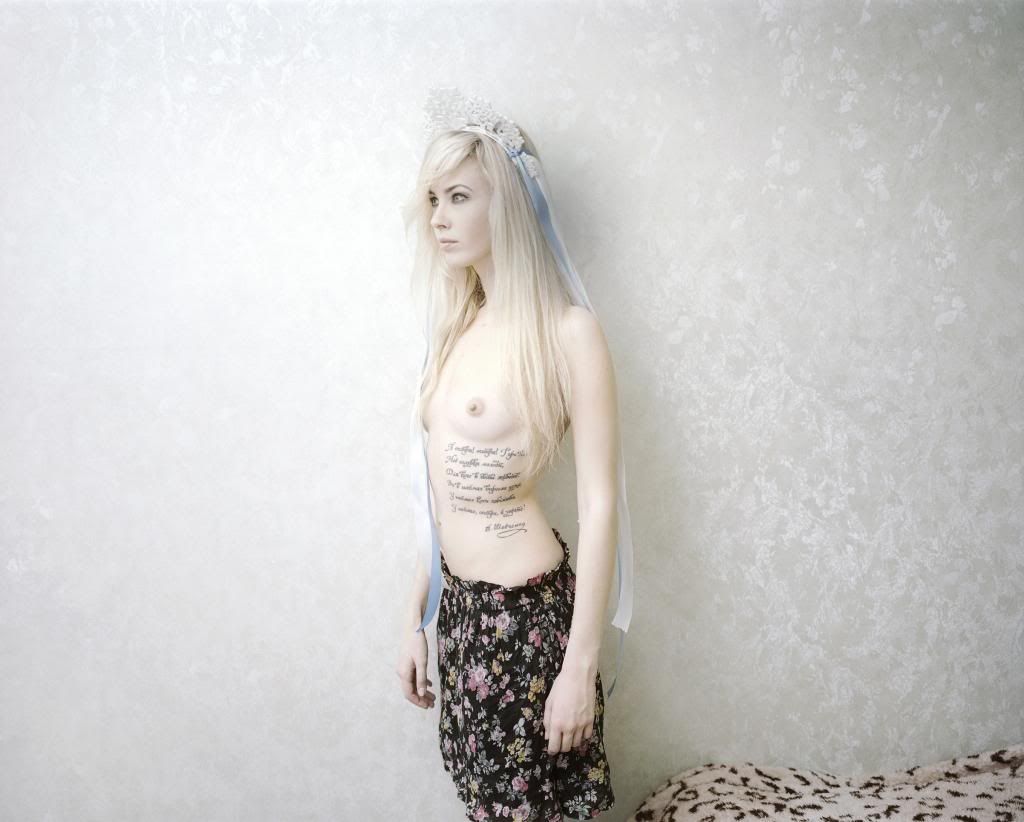
Photographer Alisa Resnik
Alisa Resnik’s (b. 1976, Russia) gloomy photos of dark interiors, people in bars and streets at night, have received a lot of attention recently. Her series One Another won the 2013 European Publisher’s Award for Photography, and as a result was published simultaneously by the five publishers supporting the award. On Christmas Eve, Resnik made time to speak with GUP about loneliness, looking for the light in the dark and how that is not a metaphor.
Your photographic work takes place mostly at night in restaurants and bars, but you also work as a waitress. Do these two occupations influence each other?
When you are a waiter, you are an observer. It’s interesting to look at people. Just to see how a person moves: how does the person order, how does the person eat, how does the person relate to the waiter? People don’t know that you are an observer, they’re eating and drinking, they’re just relaxing. They don’t know that there’s somebody who’s looking at them in a phenomenological way! (Laughs) I’ve learned a lot about people while working as a waitress, and I use it in my photography.
 

Tiksi - An interview with Evgenia Arbugaeva

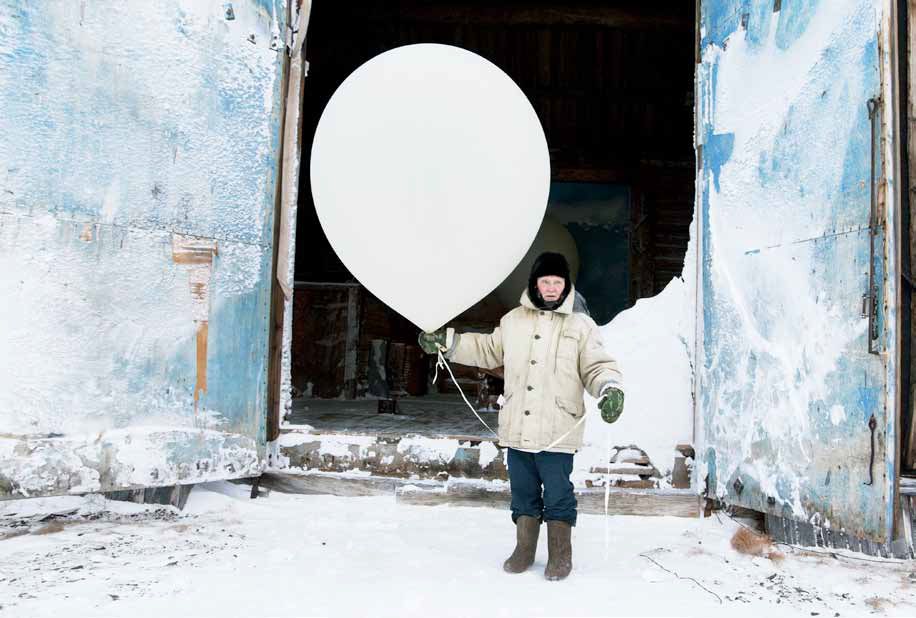
Photographer Evgenia Arbugaeva
Since her graduation from the International Centre of Photography (ICP) in 2009, Evgenia Arbugaeva (1985, Russia) has gained worldwide recognition for her work on Tiksi, a small town in Northern Russia resting on the coast of the Arctic Ocean, where she spent the early years of her childhood. In 2012 she received the Bright Spark award in the Magenta Foundation’s Flash Forward Competition for emerging photographers, and a Magnum Foundation Emergency Fund Grant.
In 2013 Arbugaeva was named one of PDN’s ‘30 Emerging Photographers to Watch’ and she won the Leica Oskar Barnack Award at the Rencontres d’Arles. She has also been selected for the 20th edition of the Joop Swart Masterclass, the annual masterclass for emerging photographers organised by World Press Photo.
Things seem to be taking off in your photography. Where did it all start for you?
When I was an exchange student in high school in Connecticut (USA), I took a class in photography.
There I learnt many things that got me into photography. Somewhat later, when I was around 19 years old, I met a female ‘Even’: a member of a nomadic indigenous tribe of Yakutia (Russia) who lives part-time in the city and part- time in a reindeer herd. Her son was wounded after a gas explosion and she didn’t have money for his surgery. 

piątek, 17 stycznia 2014

Interview: Alison Jackson, the Artist Behind the Fake Photo of Kanye and North West, Talks the Cult of Celebrity

Kate Middleton, Prince William, and Prince George / Image via Alison Jackson
Alison Jackson's staged photographs of celebrity lookalikes are so real that they've caused media scandals. Her seductive images of private moments between stars have been mistaken for real paparazzi shots...and maybe that's the point. But there's more.

Exploring "the cult of celebrity" as she calls it, Jackson's work mimics trashy tabloid spreads to question why we are so obsessed with people who we have no hope of ever knowing. From Kate Middleton to Kanye West, Jackson explores our relationship with private celebrity images. Like pornography, they seem illicit something we're not supposed to be viewing, but this feeling of trespassing makes it impossible to look away.
When we posted Jackson's image of fake Kanye West with baby North last week, the photo received a ton of attention (both positive and negative) online. It's these impassioned reactions that Jackson hopes to incite with her art. We spoke to Jackson about working with lookalikes, the influence of Andy Warhol, and the rise of selfies. She also told us that she's looking for a Miley Cyrus lookalike, especially one that knows how to twerk.

niedziela, 5 stycznia 2014

Singapore Biennale


Check out the second interview in our exclusive SBTV series! Learn more about artist Ahmad Abu Bakar's poignant and hopeful work, Telok Blangah, and his artistic process.

niedziela, 24 listopada 2013

John Myers and Jim Mortram in Conversation with Karen Newman

http://www.macarts.co.uk/Images/Events/Performance/Autumn_13/jim-large.jpg

Mon 25 Nov, 7pm
Tickets £3 (£2)
Age 16+

Some Cities is creating a range of opportunities for everyone to engage with photography, in order to develop an interactive photographic archive of Birmingham, made by the people who live, work and visit the city.
As part of our program of activities, Some Cities is pleased to announce the first of our talks program at mac birmingham. The talks aim to examine and explore a range of issues central to contemporary photographic practice, through examinations of the work, methodologies and strategies of individual photographers.
The first talk will examine the relationship between the photographer and the communities who allow them to document their lives. The talk will be chaired by Karen Newman, former curator at the Open Eye Gallery and research fellow (digital media) at Coventry University.


See And Read More »»

środa, 20 listopada 2013

Josef Koudelka: Formed by the World by James Estrin

Photo © Josef Koudelka

An interview with Magnum's Josef Koudelka on The New York Times' Lens.

Josef Koudelka started his professional life as an engineer in Czechoslovakia and switched to photography in his late 20s. He photographed the Soviet invasion of his country in 1968 and published his seminal book, “Gypsies,” in 1975 (a revised and enlarged edition was published by Aperture in 2011).
His new book, “Wall: Israeli and Palestinian Landscapes,” also published by Aperture, is a result of four years of photographing the Israeli-built wall that separates the Palestinian West Bank and Israel. The book came out of a group project, “This Place: Making Images, Breaking Images — Israel and the West Bank,” that was organized by the photographer Frédéric Brenner and included Mr. Koudelka and 11 other photographers.
Mr. Koudelka, 75, has been a member of Magnum Photos for more than 40 years. He spoke with James Estrin in Paris last week. The conversation has been edited and will run in two parts on Lens, Tuesday and Wednesday.

środa, 13 listopada 2013

Jesse Marlow with Joanna Kinowska

Photographs © Jesse Marlow
Fblog: You are a documentary photographer. What that means to you - to make documentary? Do you have any "credo"?

Jesse Marlow: Documentary photography is what has always interested me. My interest in documenting things began when I was 8 years old and my uncle gave me a book about New York Subway graffiti. This led to me borrowing my Mum’s SLR and walking around the streets with my brother looking for the brightly coloured graffiti murals that began appearing around Melbourne in the mid 1980’s. Since being a working photographer, the smaller unique stories are what I have sought. My project The Wounded was more of a conceptual documentary project, The Wounded series was shot as a result of finding myself with a broken arm and seeing so many others around me in similar situations.

Interview with John Free | Los Angeles, USA - by Street View Photograph


"Study, study, study. Practice, practice, practice and compare your photographs with those of recognized experts in the field." These are the words of John Free, 71, street / doc. photographer Learn from one of the great once! 
See And Read More »»

czwartek, 7 listopada 2013

Sobol z Magnum - art. Michała Gostkiewicza


Photographs © Jacob Aue Sobol
Niewiele brakowało, a zostałby myśliwym i polował na foki. Reportaż z Grenlandii robił dwa lata. Z rodziną Majów z Gwatemali mieszkał miesiąc. Wtapia się w fotografowaną społeczność. Tym razem miał kilka godzin - i niezwykle intymnie uchwycił w kadr mieszkańców Moskwy, Ułan Bator i Pekinu. - Nigdy nie robię zdjęć ludziom, którzy nie chcą być fotografowani - mówi portalowi Gazeta.pl fotograf agencji Magnum, laureat World Press Photo Jacob Aue Sobol.
Podając dłoń na przywitanie, uśmiecha się nerwowo, ale jego bystre oczy świdrują rozmówcę. W trakcie rozmowy przeprasza, jeśli wygląda na zmęczonego. - Za dużo wódki wczoraj - mówi rozbrajająco. Niewysoki, drobnej budowy, w szaroburozielonej kurtce, mówi cicho, starannie ważąc słowa, nie wyróżnia się z otoczenia.

I właśnie o to mu chodzi. Gdy Jacob Aue Sobol robi zdjęcia, stara się jak najlepiej poznać ludzi, których fotografuje, a potem jak najmniej im przeszkadzać, tak, by poczuli się swobodnie przed jego obiektywem.

niedziela, 27 października 2013

Rinzi Ruiz: Street Zen

© rinzi ruiz photography
Los Angeles street photographer, Rinzi Ruiz is profiled in this short film. In it, he describes what inspires his unique approach for photographing the City of Angels. You can listen to his interview on The Candid Frame on Episode #143.
This video is a collaboration between The Candid Frame and Alas Media

Video Rinzi Ruiz: Street Zen
text from: ibarionexperello.squarespace.com

piątek, 25 października 2013

“Why Did You Take This Shot?”: Interview with street photographer Marc Fairhurst (UK)

Marc Fairhurst (England) – Street Photographer – www.marcfairhurst.com
“If you go out with the intent of finding something, you give yourself tunnel vision and fail to see the larger world around you. 99% of the time that I do find something that is of interest to me, the moment is already playing itself out; the play has already begun.” Marc Fairhurst
more here

czwartek, 24 października 2013

Maciek Nabrdalik - najważniejszy jest kontakt z ludźmi /Magdalena Rudzka DCP/

"Chernobyl's Outskirts", Nyna Vasylyevna Kurynoy informuje przez telefon rodzinę o śmierci jej teściowej - Ulyany Prokopovnej (96 lat), najstarszej mieszkanki Straholesia, wsi położonej na granicy zamkniętej strefy Czarnobyla, 28.09.2010 fot. Maciek Narbdalik
Przy okazji premiery książki "The Irreversible", z portretami byłych więźniów obozów koncentracyjnych, przypominamy wywiad z jednym z najlepszych polskich dokumentalistów.

Maciek Nabrdalik to znakomity, wielokrotnie nagradzany dokumentalista, i pierwszy Polak przyjęty do prestiżowej amerykańskiej Agencji VII. Udowadnia, że w tym zawodzie liczy się nie tylko dobre oko, ale również wrażliwość i umiejętność zjednywania sobie ludzi.

Dlaczego właściwie wybrałeś reportaż?

Tak naprawdę to jedyny rodzaj fotografii, który mnie interesuje. Kiedy zaczynałem swoją zawodową przygodę z fotografią w USA, a potem w Polsce, miałem okazję dotknąć wielu gatunków fotografii. Asystowałem wziętym fotografom mody przy sesjach dla światowych magazynów, później fotografowałem wydarzenia.
Odkąd pamiętam byłem zafascynowany Agencją VII. To był główny powód. Tematy, które podejmuję, zwykle mnie osobiście bardzo interesują. Potrzebuję czasu, by je zgłębić, ten rodzaj fotografii mi na to pozwala.

Pracowałeś jeszcze w polskim dzienniku.

Tak, w Super Expressie. Po powrocie z USA w ogóle nie myślałem, że fotografia może być moim zawodem. Nic nie wiedziałem o rynku prasowym. Super Express przydarzył mi się właściwie przypadkiem. Chociaż na początku traktowałem to tylko jako przygodę, a publikacja w gazecie mnie po prostu cieszyła, po pierwszych tygodniach zrozumiałem, że to może być mój sposób na życie.
Mimo, że profil gazety nie był szczytem moich marzeń, to widziałem go jako produkt skierowany do określonego odbiorcy i - przynajmniej wtedy - bardzo profesjonalnie przygotowywany. Byli tam też fotografowie, od których wiele się mogłem nauczyć. Praca w dzienniku dawała to ekscytujące poczucie, że jest się w centrum wydarzeń. Dla fotografa nie różniła się specjalnie od pracy w innych gazetach, fotoreporterzy i tak spotykali się przy tych samych tematach. To, że moje zdjęcia były potem szparowane, zestawiane z innymi, wtedy mnie nie interesowało.

Tak naprawdę chciałam Cię zapytać o rzecz, o której się mało mówi w kontekście reportażu. Jest to gatunek najbardziej wymagający pod względem kontaktu z ludźmi, czasami bardzo obciążający psychicznie, jeśli się realizuje jakieś wyjątkowo trudne tematy. Wybierasz tematy, w które niełatwo wejść. Kiedy jakieś zdjęcie robi na mnie duże wrażenie, często zastanawiam się, jak fotograf znalazł się w środku danej sytuacji. Jaki Ty masz na to sposób?

Kontakty z ludźmi to dla mnie najważniejsza i najciekawsza część mojej pracy. Raczej staram się wniknąć w grupę, która mnie interesuje, niż się jej tylko przyglądać. To dla mnie naturalne działanie.

Interview with Frieke Janssens by Olga Drenda /DCP/


Photographs © Frieke Janssens "To the End", Project "Smoking Kids"


Frieke Janssens - kontrowersyjna fotografia reklamowa [wideo] 

Seria stylowo ubranych dzieciaków palących papierosy obiegła świat, gorsząc lub zachwycając. O tym i innych kreatywnych projektach fotograficznych rozmawiamy z ich autorką

 PROFIL

Fotograf Frieke Janssens

Frieke Janssens

  • Urodziła się w 1980 r. w Brugii, w Belgii.
  • Od 2003 r. pracuje jako freelancer.
  • Realizowała projekty fotograficzne dla wielu firm, organizacji i międzynarodowych agencji, takich jak: DDB, Leo Burnett, TBWA, Saatchi & Saatchi, Mtv Networks, Volkswagen, Red Cross. 
  • Jej prace zdobyły wiele nagród, najważniejsze to:
    2008 r. Cannes - shortlista;
    2007 r. New York Festival - złoto i brąz;
    2006 r. Eurobest - srebro i brąz;
    2005 r. New York Festival - złoto;
    2005 r. Cannes - shortlista.
  • Zobacz jej stronę www.frieke.com

Na co dzień zajmujesz się fotografią reklamową, dlatego chciałam na początku zapytać Cię o pracę przy kampaniach. Wiem, że agencje reklamowe i klienci mają z reguły dość ścisłe wymagania, ale mimo to udaje Ci się przemycić sporo własnych kreatywnych pomysłów...

Zazwyczaj zgłaszają się do mnie klienci, którzy kojarzą moje prace i lubią mój styl. Z pewnością muszę zawsze trochę powalczyć o swoje, bo działy kreacji lubią mieć czasem pełną kontrolę nad sytuacją.
Najlepiej pracowało mi się oczywiście przy tych kampaniach, przy których miałam dobry kontakt z dyrektorem artystycznym i dawał mi dużo wolności.

Którą kampanię wspominasz najlepiej?

Na pewno pracę dla Vlaams Energie Agentschap, przy kampanii edukacyjnej promującej oszczędzanie energii. Zrobiłam trzy portrety ludzi, którzy na różne dziwne sposoby starają się ogrzać. Jeden z nich przedstawiał mężczyznę z kotem na głowie. Bardzo podobało mi się, że mogłam pozwolić sobie przy tym zleceniu na realizację wszystkiego, co mi wpadło do głowy - opowiedziałam o moich pomysłach agencji i dostałam wolną rękę.

Utrzymać kota na głowie pewnie nie było łatwo!

Dlatego zrobiłam tylko kilka ujęć. Nie było tak trudno, ale nie obeszło się bez postprodukcji. Musiałam dodać ogon z innego zdjęcia. Ale kot, który siedział na głowie, był prawdziwy! To miał być portret amerykańskiego trapera z długą brodą i w czapce z szopa pracza. Nie chciałam korzystać z żadnych futer, zwłaszcza, że chwilę wcześniej pracowałam przy kampanii społecznej na rzecz praw zwierząt z udziałem Jeana Claude'a Van Damme'a. Na plakacie trzymał martwą norkę, którą oczywiście dodaliśmy w postprodukcji - żadne zwierzęta nie ucierpiały na planie. Przyszło mi do głowy, że zamiast futrzanej czapki, mogę posadzić komuś na głowie żywego kota. Przy okazji pomogło mi to stworzyć coś niebanalnego.

 more in Digital Camera Polska